Solar Panels...
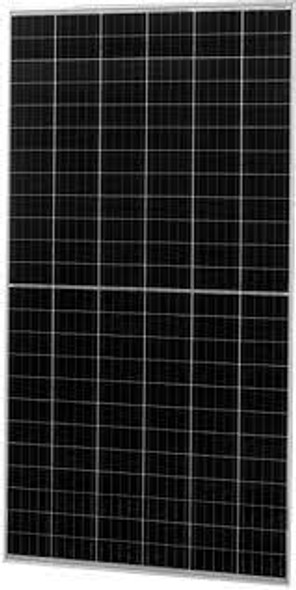
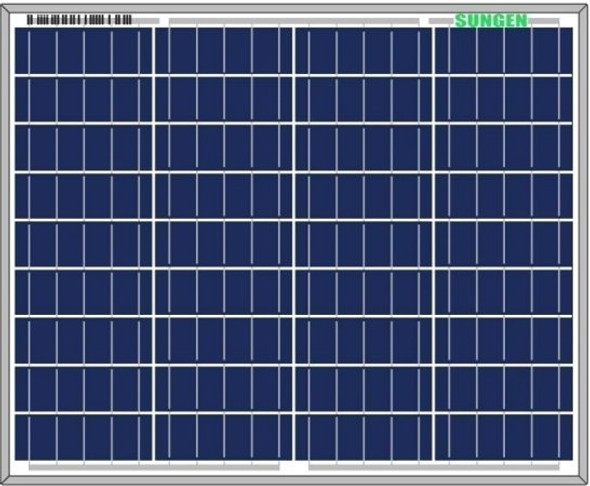
...are the main component in any solar power system. Also known as photovoltaic, or PV, panels, this device absorbs sunlight and converts that light energy into electricity that you can use for your home or for many industrial applications. More »
Grid-Tie Solar Power Systems...
...generate electricity for your home or business. These power systems, once installed, are connected to the electric utility company's power grid. When you use more power than the system is producing, the grid provides the difference. However, when your system is producing more power than you're are using, the excess electricity is directed to the grid for others to use - earning you credits toward your grid usage.
Depending on the size of the system you choose and the renewable energy policies of your local electric utility, this arrangement results in a dynamic mix of three new possibilities: 1) A reduced monthy electric bill; 2) No electric bill; 3) A credit on your bill. If your electric utility has a net-metering program, number 3 could take the form of an actual check, payment for the excess electricity your system produces and sends to the grid!
We have several pre-packaged grid-tie systems in various kilowatt sizes from which to choose. Or, we would be happy to assist you in designing a system customized to your specific needs. Let us know if we can help!
Balance of System Components
- 1.84 kW Grid-Tied Solar Power System
- 2.30 kW Grid-Tied Solar Power System
- 8.28 kW Grid-Tied Solar Power System
Off-Grid Solar Power Systems
With today's advancements in technology and manufacturing, it's possible to declare your energy independence and live completely off-grid, and it's easier than you think.
There are basically two types of residential solar power systems. Grid-tied means that your dwelling is still connected to the power company. The other type of residential solar power system, however, is called an off-grid system. This means that you have no ties whatsoever to the utility company and the utility power grid. While this seems like a highly desirable situation, care must be taken to ensure your system has the capacity to supply your energy needs.
Off-grid systems are perfect for places like vacations cabins and outbuildings on ranches and farms. Sometimes bringing traditional power to remote locations doesn't make sense from an economic standpoint. It can be very costly to run electric power to remote areas, and this is frequently one of the most expensive parts of construction in remote locations. Costs can range from $20,000 to $50,000 per mile. This is when off-grid systems are the perfect solution.
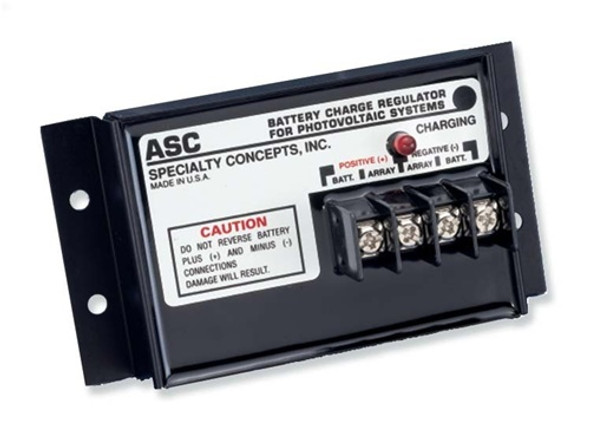
Off-grid systems operate in the same basic manner as grid-tied systems. The solar panels collect the sun's energy and, with the help of a charge controller and inverter, turns it into electricity. Because all the electricity that's generated is not used immediately, a bank of batteries will store the power until you need it.
We can help you design your system and can have everything you need to start producing your own electricity delivered to your location in a flash! Just let us know what you need and we'll walk you through it!
- 170 Watt DC Off-Grid Power System
- 510 Watt DC Off-Grid Power System
- 1080 Watt DC Off-Grid Power System
RV & Marine Solar Power Products
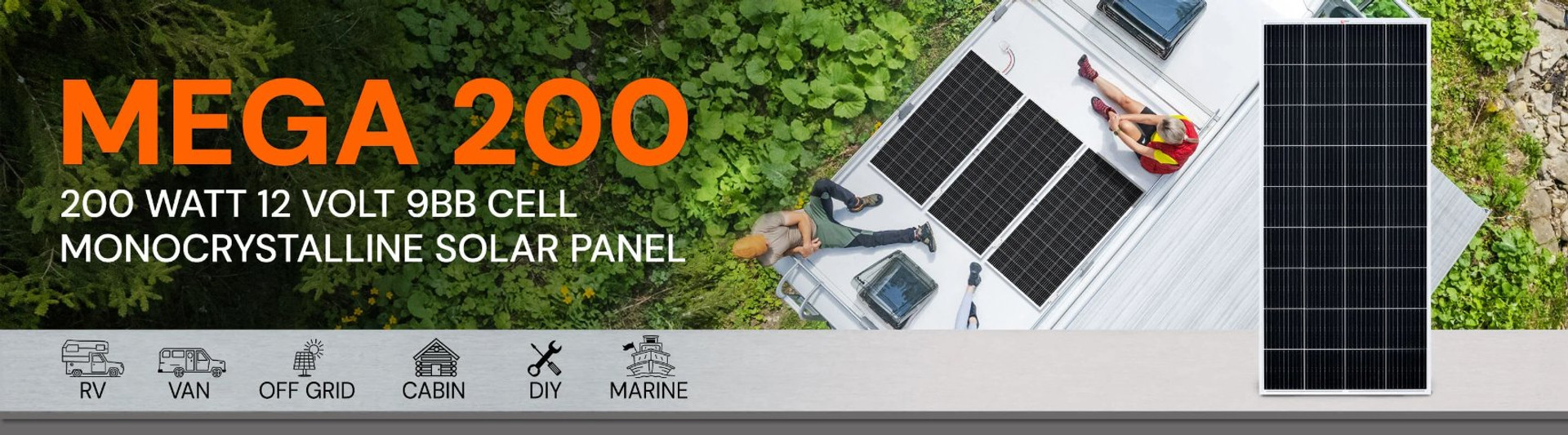
RVs are becoming more popular all the time as people realize the advantages of having the comforts of home with them every time they go on vacation. Another major advantage of RVs is the independence they provide. Some RV'ers travel far off the beaten path, limited only by access roads and their ability to carry enough fuel to satisfy their energy needs.
For years, many RV enthusiasts have relied upon generators for their power needs in remote locations. Being far from the clutter and noise of civilization has many advantages, but also a few drawbacks as well. One of the major drawbacks is the need to be tethered to a power source so owners can enjoy all the comforts their RV provides.
Many savvy RV owners have turned to solar power to supply their energy needs. Solar power for RVs is not a new concept, but as the cost of traditional fuel continues to rise, more and more people are investigating alternative energy solutions.
Solar power is a clean, quiet, and dependable source of energy. As long as you can find a place to park your RV in the sun you will be able to generate power. This is ideal for what's known as boondocking, or enjoying your RV in the most remote locations to find peace and quiet and really enjoy nature.
MrSolar.com provides complete solar power systems for your recreational vehicle or boat. Systems include solar panels, charge controller, RV Flush Mounts, and cables.
Remote Industrial Solar Power Systems
Our pole mount solar power systems are the ideal solution for remote commercial, industrial, scientific, and agricultural applications.
Our PMK series pole mount solar kits are ideal for remote applications. If you have a SCADA/RTU, radio, telemetry, remote data, monitoring device, Wi-Fi, security camera, or lighting application, our pre-packaged pole mount solar electric systems are perfect solution for your needs.
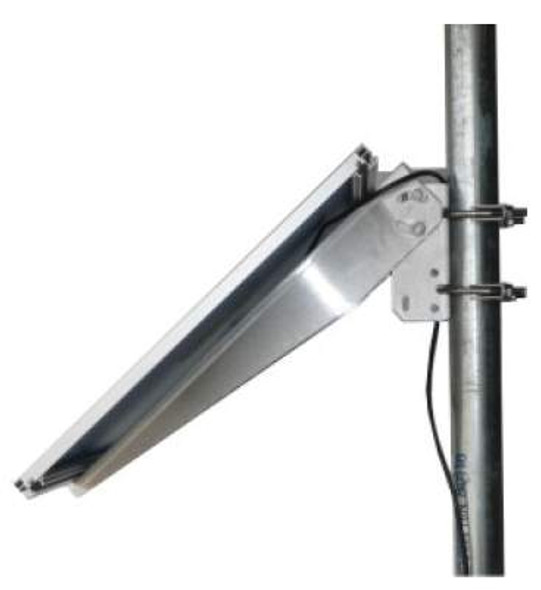
These systems will significantly decrease the cost of providing electricity in your remote site. Set your post/pole, install the solar panel in such a way as to maximize sunlight exposure, attach the aluminum battery enclosure and install the battery(ies), and run the wiring. It's as simple as that. Now you're ready to run your solar-powered application with very little if any maintenance.
These systems are the perfect solution for the following applications:
- SCADA / RTU
- Oil & Gas Flow Monitoring
- Security/Video surveillance
- Irrigation & Pump Control
- Remote Lighting
- Seismic Monitoring
- WI-FI Access Point
- Microwave Relay
- Wind Turbine LED Beacons
- Marine Navigational Aids
- Railroad Signaling
- Rural School Zone Signaling & Traffic
- Tank & Water Level Gauging
- Aerial Tower Beacons
- Cathodic Protection
MrSolar.com has shipped hundreds of these industrial solar power systems and we can provide solutions for customized system designs. All of our products our provided by top-quality manufacturers and are certified by Underwriter's Laboratories and are guaranteed to work right out of the box. Pole mount systems are the preferred choice of solar engineers as they include everything that is needed to meet their particular needs in an all-in-one kit.
Emergency Backup Power System Kits
These systems provide emergency backup power for your home when grid power is not available, such as during a utility outage. Each system comes with a pre-assembled power center designed to operate 120VAC appliances. Though adding PV panels is an option, the power center will recharge the battery bank once grid power is available. Our emergency backup systems are also generator-compatible, allowing for a different method of recharge during extended periods of utility outage.
Solar Sign Lighting System Kits
Our pre-packaged solar sign lighting systems include the following: Solar Panel, Battery, Charge Controller, Mounting Structures, Wiring, Lighting, and Battery Box. We have everything you need for your new solar powered sign or replacement parts for your existing solar sign
Wind Power Systems
Residential wind power systems provide dependable energy for remote homes, telecommunications sites and rural applications in moderate to extreme environments.
3W to 20W PV Modules Individually Boxed for OEM/Resellers • Carton Quantities
Solar Panels For Sale
BP Solar | NEW! Helios Solar Works | NEW! LDK Solar | MrSolar BrandSamsung | Sanyo | Sharp | SolarLand® | SolarTech Power
SolarWorld | SolCharger | SunWize | Suntech
LDK Solarhas an established track record of delivering consistently high quality solar modules.
NEW! FREE SHIPPING ON THIS ITEM!
LDK Solar 250 Watt PV Panel • Spec Sheet • More »

More LDK Solar PV Panels »
Helios Solar Worksmanufactures high- performance mono- crystalline solar modules for solar electric systems.
NEW!
Helios 250 Watt PV Panel • Spec Sheet • More »

More Helios Solar Works Panels »
BP Solaris a global company focused on harnessing clean, renewable solar energy.
BP Solar 215 Watt PV Panel • Spec Sheet • More »
BP Solar 230 Watt PV Panel • Spec Sheet • More »
More BP Solar Panels »
Trina Solaris a leading manufacturer of high quality mono and multicrystalline PV modules.
Trina Solar 185W • Spec Sheet • More »
Trina Solar 230W • Spec Sheet • More »
More Trina Solar Panels »
Solarlandoffers products of the very highest quality for your home.
*** Solar Panels for OEM/Resellers - Carton Quantities - 3W to 20W Individually Boxed ***
Solarland 110 Watt PV Panel • Spec Sheet • More »
Solarland 130 Watt PV Panel • Spec Sheet • More »
More Solarland Solar Panels »
SuntechFind out why more homeowners are discovering that Suntech is the smart choice in solar.
SunTech 65 Watt Solar PV Module • Spec Sheet • More »
SunTech 130 Watt Solar PV Module • Spec Sheet • More »
More Suntech Solar PV Panels »
Mr Solar Brandhigh-performance multi-cyrstaline cells featuring high energy yields in a wide variety of climates.
20 Watt Mr Solar Brand PV Module • Spec Sheet • More »
40 Watt Mr Solar Brand PV Module • Spec Sheet • More »
More Mr Solar Brand PV Panels »
SharpOur residential systems give families the ability to generate their own electricity from Sun - with no harmful emissions.
Sharp 130 Watt Solar Module • Spec Sheet • More »
Sharp 235 Watt Solar Module • Spec Sheet • More »
More Sharp Solar Brand PV Panels »
Sanyois developing clean energy products while maintaining harmony with the global environment.
220 Watt Sanyo Solar Module • Spec Sheet • More »
More Sanyo PV Panels »
SolarTech Powermanufactures, distributes and sells high efficiency solar panels, solar PV and wind power turbines.
SolarTech 10 Watt Solar Module • Spec Sheet • More »
SolarTech 80 Watt Solar Module • Spec Sheet • More »
More SolarTech Power PV Panels »
Back to Top
Residential & Commercial Solar Power Kits
Grid-Tie Systems | Off-Grid Systems | RV & Marine | Industrial Pole MountSign Lighting Systems | Backup Power | Wind Turbines
Grid-Tie SystemsComplete grid-tie solar power system kits. Mounting sold seperately.
3.22kW Online Solar Grid Tie System »
12.65kW Online Solar Grid Tie System »
More Grid-Tie Solar Power System Kits »
Off-Grid SystemsThese systems provide power in off-grid locations.
510 Watt Off-Grid Power System »
1800 Watt Off-Grid Power System »
More Off-Grid Solar Power Kits »
RV & Marine Solar Power Kits
Grid-Tie Systems | Off-Grid Systems | RV & Marine | Industrial Pole MountSign Lighting Systems | Backup Power | Wind Turbines
RV & Marine Solar PanelsThese solar kits are designed to charge the batteries aboard your RV or boat.
30 Watt RV Kit »
130 Watt RV Kit »
More RV Solar Power Kits »
Solar Panels 101 - An Introduction
What is Solar Energy?
Solar energy is one of the most bountiful sources of energy on our planet. It is also considered one of the most clean sources of energy available. Solar energy does not need to be extracted, transported to and fro, nor is any costly exploration required to find it. On top of that, solar energy is completely sustainable because as long as we have the sun, we'll have electricity. That is unless the sun gives out, but then we'll have much larger issues to worry about!
There are various kinds of solar energy and ways to harness it. However, photovoltaic (or PV) modules are quickly becoming more and more popular due to their increased efficiency and ease of use. As of now, they are the number one way to collect light and turn it into energy. Also widely known as "solar panels", PV modules come in a huge variety of types and sizes and are used as the power solution for many different applications including residential and commercial grid-tie solar power systems as well as off-grid and industrial systems.

How Do Solar Panels Work?
Basically, photovoltaic solar panels create electricity by converting sunlight into energy. The process by which this happen is known as the photovoltaic effect. "Photovoltaic" essentially means light electricity. You may have noticed that certain small devices like a solar-powered calculator won't work in the dark, but when exposed to light it will work just fine. This is an example of a tiny electric power generator built right into an everyday item with which that everyone is familiar. Many people are now lighting up their yard or landscaping with solar-powered garden lights. And perhaps you've seen traffic control signage and lighting powered by solar panels.
Made most commonly using the mineral silicon, solar cells essentially create electricity by converting photons of light into electrons. The "photovoltaic effect" occurs when photons of light from the sun strikes these cells, a portion of the energy is absorbed into the silicon, displacing electrons which then begin to flow. In order to harness this flow, the electrons are drawn into a magnetic field generated by positively- and negatively-charged metal contacts on the top and bottom of the cell. producing direct current, or DC, electricity. Using a DC to AC inverter, the DC current is converted to alternating current, or AC, which can then be used to power electrical appliances.
The History of Solar Panels
Many people mistakenly assume that solar panels and solar power have a relatively new history. Did you know that in reality, the search for alternative energy sources relating to solar power dates back to the 1830's? In fact, Leonardo da Vinci even had sketches and ideas of how to harness the sun's energy.
In 1839, a young man named Alexandre-Edmond Bequerel became the first to discover the photovoltaic effect. Nearly forty years later, William Grylls Adams in 1876 developed a more sophisticated solar sell. He discovered that a solid material called selenium produced electrical currents when exposed to the light of the sun. This might sound simple, but it was a huge step towards the advanced solar panels we use today. It wasn't until 1953 when solar energy was able to be put to practical use. Gerald Pearson of Bell Laboratories developed a solar cell using silicon instead of selenium. Unfortunately, like most new technologies, Pearson's solar cells were way out of most anyone's price range. However, the U.S. military bought into Pearson's invention and that's when solar energy really took off! In the early 1970s the development of solar panels became less expensive and was used for other applications besides military use, particularly interesting is their use in space and aeronautics as well as telecommunications, remote sensing, and marine navigation and research.Recently with technological improvements mounting price of solar panels has dropped and continues to drop as their popularity and production increases precipitously.
Advantages of Solar Panels
Private home owners are discovering the benefits to our environment and a way to live happily off the grid or are considering installing a grid-tied solar power system to offset their electric bill or due to a belief in reducing their carbon emissions. These are great reasons to "go solar"...
- • Ecologically Friendly
For obvious reasons, the use of solar panels is Eco-friendly and considered one of the most "green" electricity resources. Because solar panels rely on a renewable energy source, there is no fear of depleting yet another natural resource.
- • Decreased Electrical Bill
By switching to solar energy, you will save money on your electrical bills every month. Even if electricity bills continue raising in the next few months you will have the peace of mind knowing that your energy source is based on solar power.
- • Low Maintenance
solar panels have no moveable parts and are very simple to use. After being set up properly, they do not need to be tinkered with and will continuing working for many years. In fact, many solar panel manufacturers have 25 year warranties on their panels.
- • Efficiency of Solar Panels
No matter where you live, the chances are that you can successfully use solar panels for you electrical needs. They are rugged and are very adaptable to climate conditions and the latest panel models are efficient enough to work well without facing directly south and some will even produce electricity under cloud cover.
Regardless of who you are or what type of home you have, solar power is one of the best ways to provide you and your family with electricity without causing more damage to our planet. Buuutt...

How Much Does It Cost?
Many people make the mistake of prematurely writing off solar panels as a primary or secondary source of electricity due the perceived high costs. True, they are fairly expensive for most people's budgets. However, there are tax rebates and other state, local, and utility company incentives for which you may qualify, significantly reducing the cost of an installed solar power system. We choose to look at it another way, never-minding incentives: instead of buying that next SUV, invest in a residential solar power system. After all, the cost is roughly the same before incentives and rebates. But doing so would do two very important things: 1) Insead of an SUV that's going to spew harmful green-house gases for several years you'll have a power generating plant installed and generating clean, renewable electricity for your home, and 2) You'll either reduce or eliminate your monthly electric bill, depending on the size of system you invest in. If you install and large enough system and you use less electricity than your system produces, you may even get paid for that unused electricity through and arrangement commonly referred to as "net metering". Imagine, instead of sending your electric power company a check each month, you get a check from them!
Today's Solar Panel Technology
Solar panel technology improves seemingly by the day thanks to agressive research and development efforts. We have gone from an extremely expensive and relatively inefficient solar panel in the 1970s that only our government could afford to a fairly priced, highly efficient panel today that most anyone can afford.
Regardless of our technological advances, photovoltaic panels will remain the primary component of photovoltaic systems for the foreseeable future. There are various different types of photovoltaic cells that are currently being developed to improve efficiency and production costs.
Another very interesting and promising field of research is in the development of photovoltaic concentration technology. This technology uses specialized equipment to focus great amounts of sunlight rather than just what happens to be shining down on the solar panel.
Every day sees new breakthroughs in PV technology as researchers strive to create cheaper and more efficient products. Even with all the activity in the solar industry, one thing is for certain, solar panels are one of the best ways to create electricity simply and efficiently while reducing carbon emissions and making life better for all of us.
What Are You Waiting For?
For many home owners there is no longer any excuse for not giving solar power a try. Indeed, after calculating applicable state and federal tax and utility company rebates and incentives, and with historically low prices on quality solar panels, more people than ever can afford the luxury of producing clean, renewable energy for their home!
« Back to Top